


CompozyOS
Active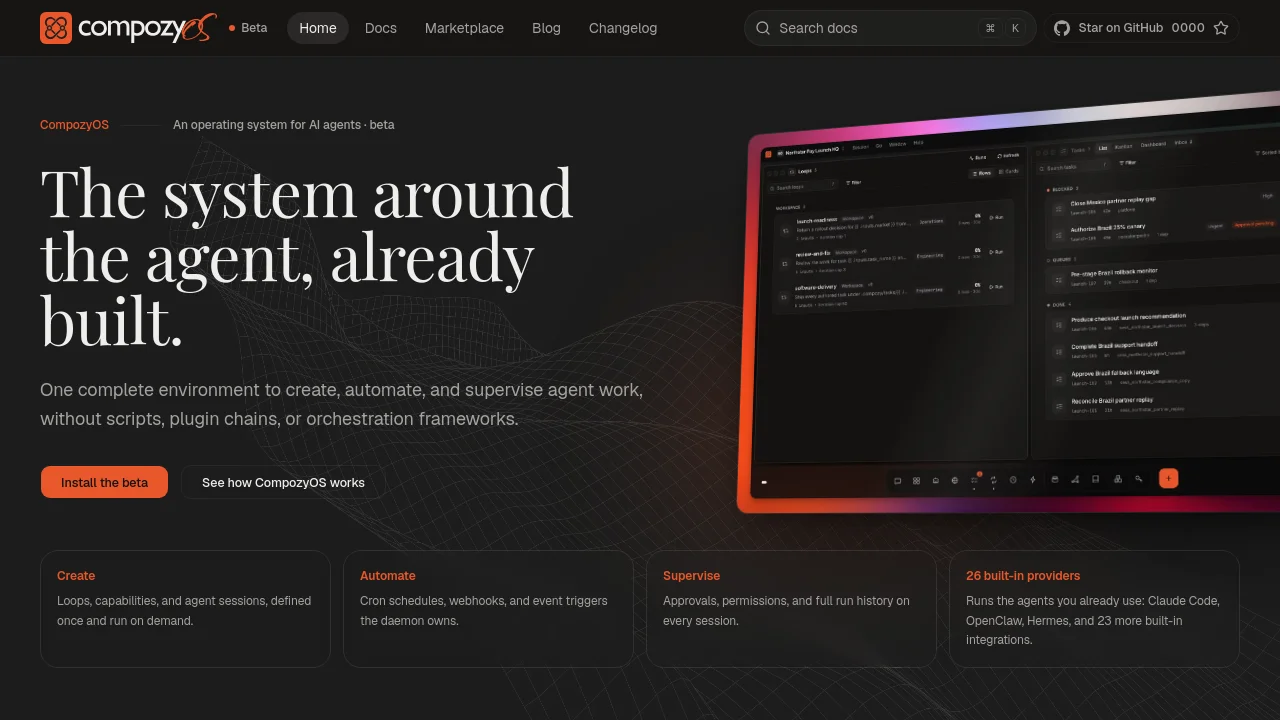
What is CompozyOS?
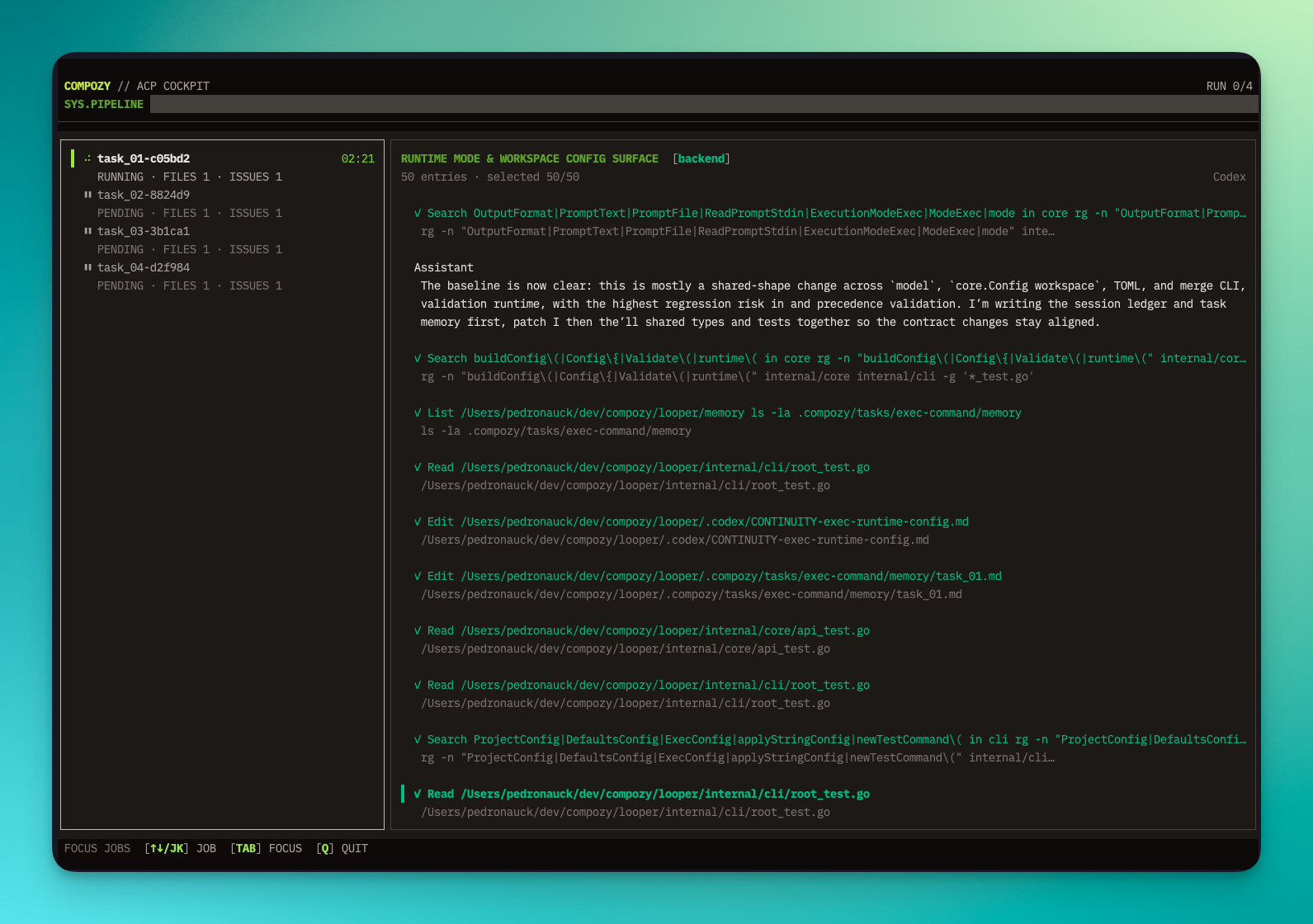
How to use CompozyOS?
CompozyOS Core Features
Daemon-Owned Sessions & Autonomy Kernel
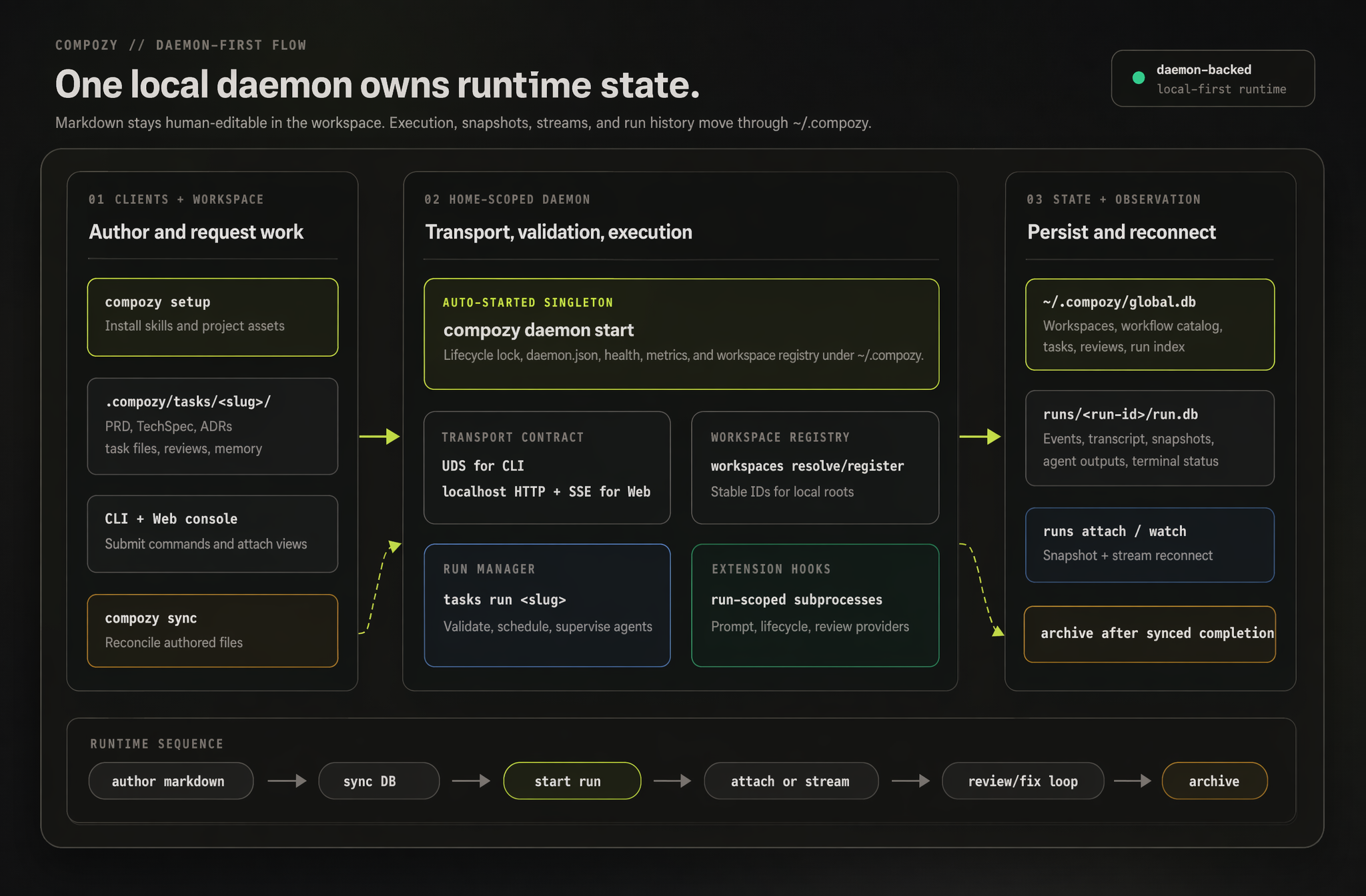
Runs agent sessions as background daemon processes with lease heartbeats, token-fenced task queues, and automatic recovery if a worker crashes.
File-Backed Compound Memory
Maintains workspace and agent context in plain typed Markdown files that compound over time through scheduled dream consolidation sessions.
Runtime Permissions & Supervision
Enforces approval prompts, lineage tracking, and permission narrowing directly in the runtime rather than relying on LLM prompt conventions.
Multi-Agent Coordination & Bridges
Connects inbound channels like Slack, Discord, and Telegram to durable sessions, and routes work across agents via the open Compozy Network protocol.
CompozyOS Use Cases
Run autonomous background developer tasks and cron jobs using Claude Code or OpenClaw without keeping terminal windows open
Coordinate multi-agent workflows with shared workspace memory and token-fenced task claiming
Connect chat platforms like Slack or Discord to durable agent sessions with runtime approval gates
CompozyOS Frequently Asked Questions
Which agent CLIs are supported out of the box?
How does memory work in CompozyOS?
Does CompozyOS require external cloud infrastructure or databases?
CompozyOS Product Background & Official Links
CompozyOS Support Email & Customer service contact & Refund contact etc.
CompozyOS Support Email: support@compozy.com
More Contact, visit the about us page(https://compozy.com/docs)
CompozyOS Company Info
CompozyOS Company name: CompozyOS
More about CompozyOS, Please visit the about us page(https://compozy.com/docs)
CompozyOS Twitter
CompozyOS Twitter Link: https://twitter.com/compozyai
CompozyOS GitHub
CompozyOS GitHub Link: https://github.com/compozy
CompozyOS Pricing & Plans
Open Source
Free- MIT Licensed open source runtime
- Unlimited local agent sessions and loops
- File-backed workspace memory and dreaming
- 26+ built-in provider and agent integrations
- Local web shell, CLI, HTTP, and UDS surfaces